Shopping Cart


Which holiday foods are dangerous for your dog or cat
Categories :
I have a cat
, I have a dog
, Pet feeding
Every Christmas, veterinary emergency rooms are filled with cases that could have been avoided: a piece of nougat under the table, a turkey bone thrown in the bin that a pet retrieves, a chocolate dropped by a child. These are the days of the year with the most food poisoning in dogs and cats, so it's a good idea to be aware of this before the family meals begin.
Many of the foods that grace the Christmas table are perfectly safe for people but toxic or dangerous for dogs and cats, even in small quantities. The problem is that most of these foods are easily accessible to pets precisely when we're least vigilant, with the house full of people and guests who aren't aware of the rules.
The good news is that you don't have to leave your pet out of the celebration: there are alternatives specifically designed so that they too can have their own Christmas treat without any risk.
Food items on the table that you should keep out of their reach
Chocolate (the purer, the more dangerous) contains theobromine, a substance that dogs and cats metabolize very slowly and that can cause anything from vomiting to serious arrhythmias. Grapes and raisins, common in desserts and fruit nougat, can cause kidney failure even in small amounts, though the exact reason is still unknown. Onions and garlic, frequently used in stuffings and sauces, damage red blood cells and can cause anemia days after ingestion. Cooked turkey or chicken bones splinter easily and can perforate the digestive tract, so it's best to remove them before your pet has access to them, not only during meals but also when throwing away leftovers.
Why "normal" nougat is a bad idea, even if it's just a small piece.
Nut nougat can contain macadamia nuts, which are toxic to dogs even in small amounts, and its high fat content is one of the most frequent causes of pancreatitis this time of year. Sugar-free versions often contain xylitol, a sweetener that causes a sudden and dangerous drop in blood glucose levels in dogs, even in minimal quantities. And chocolate nougat, of course, adds the risk of theobromine to all of the above. In short: no nougat intended for humans is a good idea for a pet, no matter how little they are given.
How to include your pet at the table without risking their health
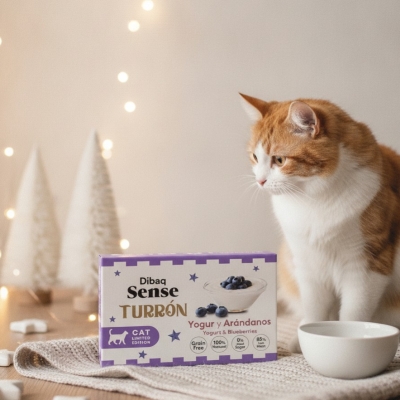
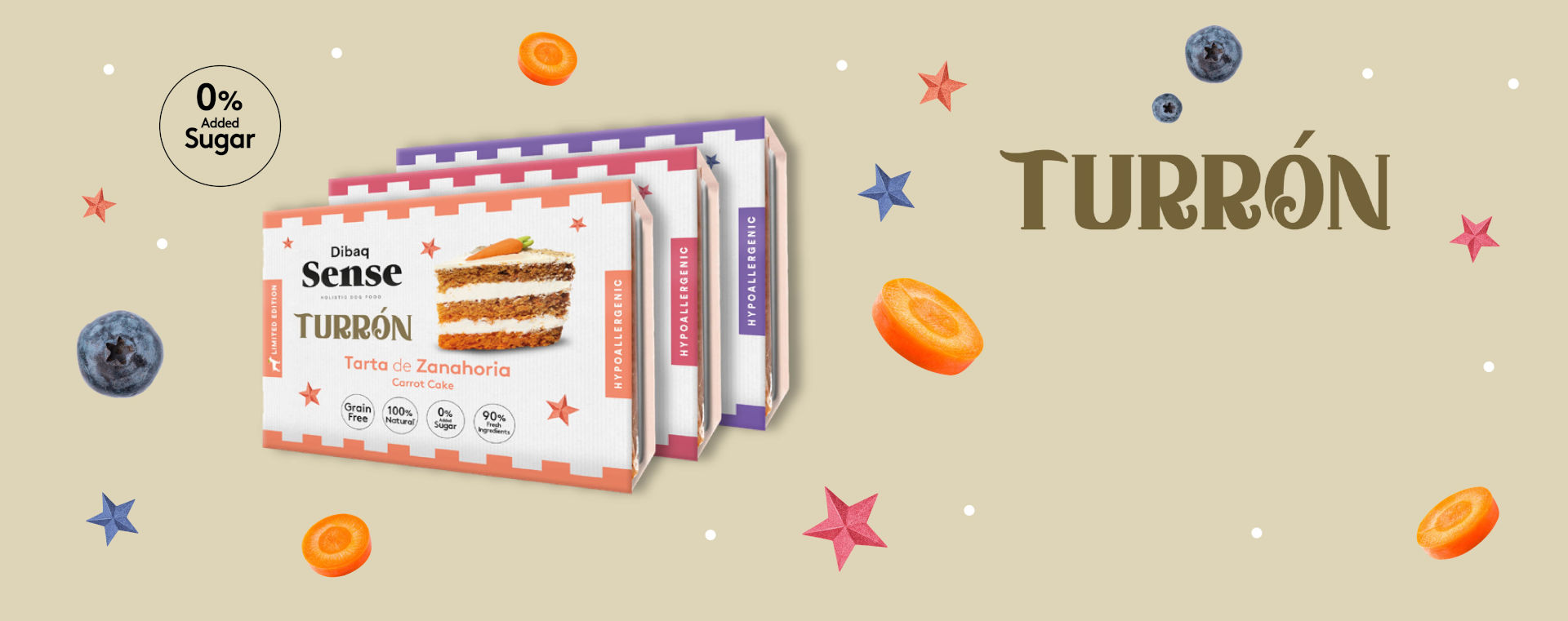
That's why Dibaq Sense soft nougats for dogs and cats exist, designed specifically so they can also enjoy a Christmas treat: made with around 85% fresh meat, with no added sugar, grains, or nuts, in flavors like Mango Panna Cotta, Yogurt & Blueberry, or Cheesecake for dogs, and Cheesecake and Yogurt & Blueberry for cats. They are a complementary food, not a substitute for their regular diet, so it's best to give them as an occasional treat, and if your pet has allergies or any health condition, consult your veterinarian beforehand.
Share this content