Shopping Cart


Spanish Water Dog: the national breed that's taking the search world by storm
Categories :
Breed Guide
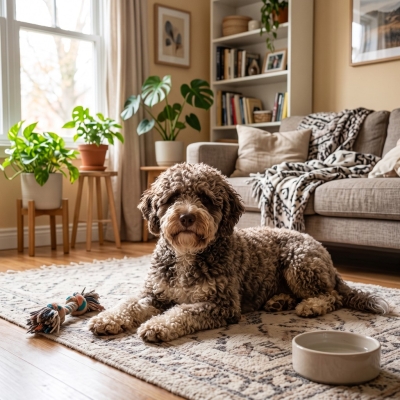
According to the latest data from the Royal Canine Society of Spain, the Spanish Water Dog is once again the most sought-after breed in the country, ahead of historically more popular foreign breeds. It's a good time to tell your audience about this native breed, with centuries of experience working on the Andalusian coast assisting fishermen and shepherds, and which today is thriving as an active family dog.
Its most recognizable feature is its coat: curly, woolly, and dense, forming cords as it grows and shedding very little. This makes it more manageable in homes with mild allergies, but it doesn't require care: this coat needs an extra supply of omega-3 and omega-6 fatty acids to stay healthy and prevent skin problems, especially if it's regularly sheared, as is traditional for the breed. Furthermore, it's a working dog by nature, with a high energy level and a real need for daily exercise, which translates into a higher calorie expenditure than a sedentary breed of similar size.
The perfect angle for Dibaq: a Spanish breed, authentic and trendy, that needs high-quality energy nutrition to support its activity and a formula that cares for its skin and coat from within. A post with national appeal and current relevance, plus great search potential.
A working dog with centuries of history
Its origins trace back to the coasts of Cádiz and Huelva, where it helped fishermen haul in nets, retrieve escaped fish, and even carry messages between boats, while inland it was used as a herding dog. This dual life as a water dog and a working dog on land explains its intelligence, stamina, and need to feel useful: it's a breed that performs much better when it has a task or long swimming sessions than lying on the sofa all day.
The fur that dictates her entire routine
Unlike other long-haired breeds, the Spanish Water Dog is not brushed: its coat is either left to grow into cords or is completely sheared once or twice a year, never partially, because a partial cut disrupts the cord structure. This leaves the skin very exposed after shearing, especially in summer, so a good supply of omega-3 and omega-6 fatty acids in the diet helps maintain a strong skin barrier so that the hair grows back healthy and with its characteristic curl.
How much energy do you really need?
This breed is not suited to small apartments without frequent walks: it needs at least an hour of vigorous exercise a day, ideally with access to water, and without this energy expenditure, it tends to channel boredom into destructive behaviors. Therefore, its daily ration should be calculated based on its actual activity level and not just its weight, opting for high-energy-density kibble that meets this expenditure without providing excessive amounts of food.
Share this content