
Shopping Cart







How many times a day should your dog or cat eat: an age-based guide
Categories :
Pet feeding
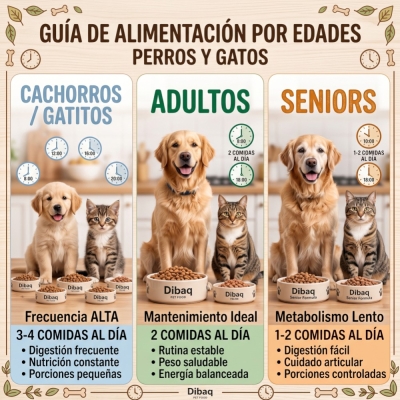
How many times a day should you feed a dog or cat is one of the most common questions among pet owners, and the correct answer is not the same throughout their life.
The frequency of feedings is not simply a matter of convenience: it influences digestion, the feeling of satiety and, in large breeds, even the prevention of serious problems such as gastric torsion.
The key is to adapt the number of feedings to each stage of life, from puppies and kittens to senior pets, including adulthood.
Puppies and kittens: why they need to eat more often
During the first few months of life, a puppy's stomach is small and its energy expenditure for growth is very high, so three to four feedings a day are recommended. Spacing out meals too much during this stage can lead to low energy levels or even hypoglycemia, especially in small breeds.
Adults: two doses a day, the most recommended routine
In adulthood, most dogs and cats do well with two daily feedings, one in the morning and one in the evening. This spacing helps maintain a stable appetite, prevents them from going too long with an empty stomach, and, in large breed dogs, reduces the risk of gastric dilatation-volvulus (GDV) compared to a single large meal per day.
Senior: Smaller, more frequent meals again
As pets age, digestion slows down and appetite often changes, so many senior pets benefit from smaller, more frequent meals, similar to how they ate as puppies. Any sudden change in the amount they eat or their interest in food warrants a veterinary check-up, as it's often one of the first signs that something is wrong.
Share this content