Shopping Cart


How to really read a pet food label: what matters (and what's just marketing)
Categories :
Dibaq pets
, Pet tips
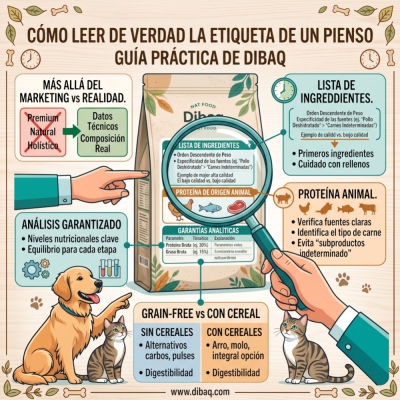
When faced with pet food, most owners look at the picture on the packaging, the word "premium" or the current advertising claim, but the information that really matters is in the small print of the label.
The law requires that the list of ingredients and analytical guarantees be shown, and that is where you can really find out what a pet food contains, beyond the marketing that appears on the front of the package.
Learning to read this data allows you to compare brands with discernment and understand why a pet food may cost more or less, instead of being guided only by the packaging or the price.
The ingredient list: why the order matters
The ingredients are listed by weight before cooking, so those at the top of the list are the most abundant. Look for clearly identified sources of meat or fish (chicken, salmon, lamb) rather than generic terms like "animal by-products," which can mask much lower-quality ingredients.
Analytical guarantees: numbers that actually say something
The analytical guarantees section shows the percentage of protein, fat, fiber, ash, and moisture in the food. These numbers allow you to assess whether the formula is suitable for your pet's age, activity level, or specific needs—something that no words on the packaging can replace.
Words that don't mean what they seem
Terms like "natural," "premium," or "no artificial preservatives" don't have a strict legal definition and are used quite freely on labels. The most reliable way to assess pet food remains to look at the actual ingredient list and analytical guarantees, not the most prominent words on the packaging.
Share this content