Shopping Cart

How to change your pet's food without digestive problems
Categories :
Pet feeding
, Pet tips
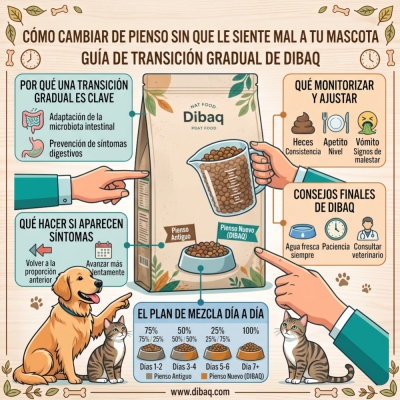
Changing your pet's food, whether due to age, brand, or to switch to a grain-free formula, is one of the times when your pet's digestive system is most likely to suffer if it is not done carefully.
The reason is simple: the intestinal flora is adapted to the ingredients it has been eating up to that point, and needs time to adjust to a different composition, even if the new food is of better quality.
Making the transition gradually, instead of changing from one day to the next, is the difference between a smooth adaptation and several days of diarrhea, vomiting, or rejection of the new food.
The 7-10 day rule
The usual practice is to mix the new food with the old food in increasing proportions: 25% new food with 75% of the old food for the first 2-3 days, then switch to 50-50% for another 2-3 days, continue with 75% new food and finish with 100% around day 7 or 8, provided the pet tolerates it well at each stage.
Signs that the transition is happening too fast
Soft stools, occasional vomiting, or decreased interest in food during the change are signs that it's best to slow down: maintaining the current ratio for a few more days before continuing to advance usually solves the problem without needing to return to the previous feed.
Cases that need more patience
Senior pets, those with a history of digestive issues, or those switching from a cereal-based to a grain-free formula often require a longer transition period, two to three weeks instead of one. In these cases, and whenever persistent symptoms appear, it's best to consult your veterinarian before proceeding with the change.
Share this content