
Shopping Cart





Urinary and Renal Support in Cats: A Complete Guide to Caring for Your Feline
Categories :
I have a cat
, Pet feeding
, Pet tips
The health of the urinary and renal systems is fundamental to ensuring a long and fulfilling life for our cats. Due to their evolutionary origins as desert animals, cats possess an amazing ability to concentrate urine, an adaptation that allowed them to survive with little water. However, this same ability becomes their greatest vulnerability in the modern domestic environment.
The fragility of the feline urinary system
Feline lower urinary tract problems (FLUTD) and chronic kidney disease are, unfortunately, among the most frequent reasons for visits to veterinary clinics. From the formation of crystals and stones (urolithiasis) to idiopathic cystitis, the spectrum of conditions is broad. When the urinary system is not functioning properly, the cat's well-being is immediately compromised, causing pain, stress, and, in severe cases, life-threatening emergencies. Furthermore, we must consider that cats are experts at hiding pain. Therefore, prevention is not just an option, but a responsibility of the owner. A balanced diet, specifically designed for the cat's physiological needs, is the most powerful tool we have at our disposal.
Neutered cats: A higher risk group
Sterilization is an essential procedure for population control and the prevention of territorial behaviors and reproductive diseases. However, it entails significant metabolic changes. A neutered cat tends to reduce its level of physical activity and experiences an increase in appetite, which raises the risk of obesity. Obesity is directly related to urinary health: overweight cats often urinate less frequently, allowing urine to remain in the bladder longer, facilitating mineral precipitation and crystal formation. This is where specialized nutrition plays an undeniable role.
Nutritional Solution: The Dibaq Petcare Range for Sterilized Cats
To address these challenges, Dibaq Petcare has developed a line of dry food specifically designed for neutered cats with a preventative focus on kidney and urinary health. You can explore their specialized catalog here: Dibaq Petcare - Special Care .
Benefits of a specialized diet for kidney and urinary support
1. Precise control of minerals (Magnesium, Phosphorus and Calcium)
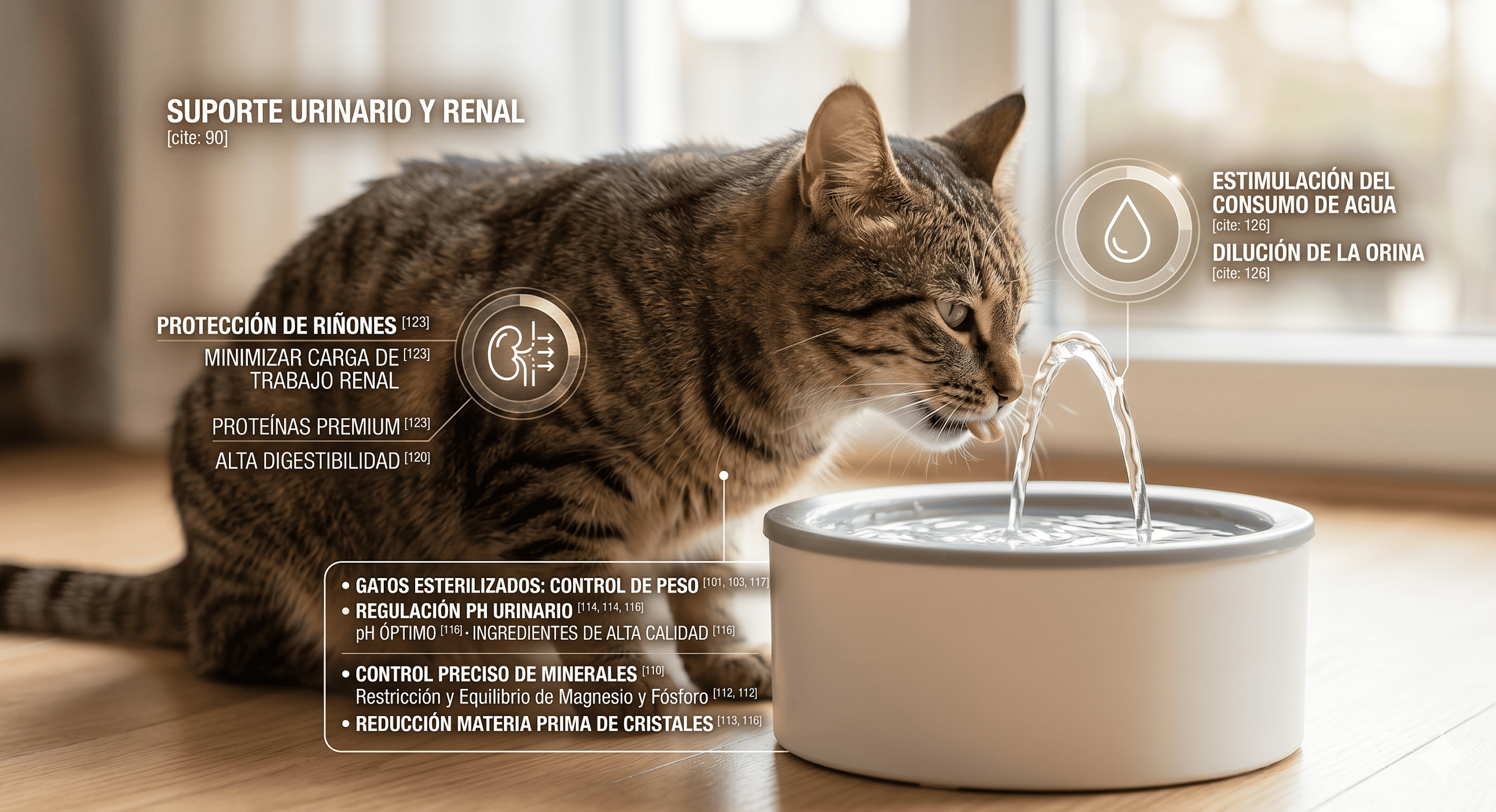
The formation of struvite or calcium oxalate stones depends largely on the concentration of minerals in the urine. Dibaq food for sterilized cats is formulated with restricted and balanced levels of magnesium and phosphorus. By reducing the "raw material" for the crystals, the likelihood of urinary blockages is drastically decreased.
2. Regulation of urinary pH
Urine pH is a critical factor. An overly alkaline environment favors struvite, while an excessively acidic one can promote oxalate. Dibaq's high-quality diets incorporate ingredients that help maintain an optimal (slightly acidic) urinary pH, creating an environment inhospitable to the formation of mineral deposits.
3. Prevention of obesity and renal burden
Because these formulas are designed for neutered cats, they have a controlled calorie intake and a high content of natural fibers that promote satiety. Maintaining a cat's ideal weight not only protects its joints and heart but also reduces the metabolic effort the kidneys must make to process excess nutrients.
4. High-quality, easily digestible proteins
The kidneys are responsible for filtering the waste products of protein metabolism. If a cat ingests low-quality protein, more toxic waste products (such as urea) are generated, which the kidneys must filter. Dibaq uses premium protein sources that are fully utilized, minimizing the workload on the kidneys and protecting this vital organ in the long term.
Additional tips for urinary health
Although feed is the foundation, there are other strategies that enhance the benefits of the Dibaq diet:
- Encourage water consumption: Use running water fountains, as cats are attracted to movement and this encourages them to drink more, thus diluting their urine.
- Multiple litter boxes: Make sure your cat always has access to a clean place to urinate. If the litter box is dirty, the cat may retain urine, which can lead to infections.
- Environmental enrichment: Stress is a trigger for cystitis. Providing scratching posts, high areas, and daily play keeps their nervous system balanced.
Conclusion
Caring for your cat's kidneys and urinary system is an investment in their future. Choosing a dry food like Dibaq Petcare, specifically formulated for the needs of neutered cats, allows you to sleep soundly knowing you're preventing the most common health problems in the species. Don't wait until your cat shows signs of illness. Preventative nutrition is the most consistent act of love you can offer. Explore the Dibaq selection and choose the perfect partner for your feline companion's health.
This article is for informational purposes only. Always consult your veterinarian before making any drastic changes to your pet's diet.
Share this content