Shopping Cart


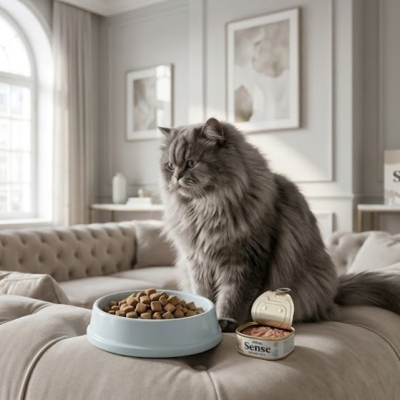
Maine Coon: the gentle giant that needs nutrition to match.
Categories :
Breed Guide
The Maine Coon, along with the Sphynx and the Persian, is one of the most searched terms by cat lovers in Spain, and with good reason: it's one of the largest domestic cat breeds in the world, with males that can exceed 8 kilos, an almost dog-like affectionate temperament, and a spectacular semi-long coat. All of this, however, comes with a nutritional caveat that few posts explain well.
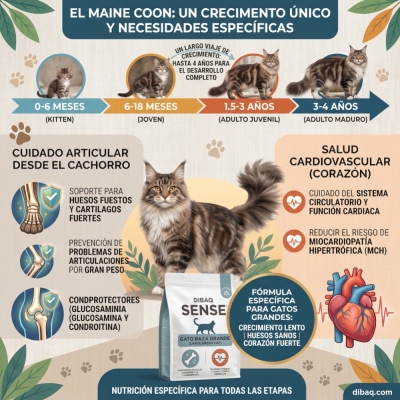
Unlike a common cat, the Maine Coon doesn't finish developing until 3 or 4 years of age. This much slower and more prolonged growth requires a very balanced intake of calcium and phosphorus throughout this period to ensure proper bone and joint development and prevent problems like hip dysplasia. This breed also has a genetic predisposition to hypertrophic cardiomyopathy, making a good supply of taurine especially important. And then there's that dense, water-resistant coat, which needs omega-3 and omega-6 fatty acids to prevent matting and weakening.
An ideal post to talk about your range for large breed cats: mineral control during the growth stage, taurine for the heart and omega for a coat worthy of the fame of the most photogenic cat on the internet.
A giant with a farm past
The Maine Coon descends from cats that worked as rodent hunters on farms in the northeastern United States, hence its thick, waterproof fur, tufted ears, and large paws, adapted for moving through the snow. This semi-wild cat genetic makeup now coexists with an exceptionally sociable nature, making it one of the most popular breeds for families, despite its size.
Why can't he be fed like a normal cat?
While most cats complete their skeletal development around one year of age, the Maine Coon continues to grow for another two or three years, meaning its kitten stage, nutritionally speaking, is much longer than usual. Feeding it adult food too soon, or a generic kitten food not formulated for large breeds, can disrupt its calcium and phosphorus intake precisely when its bones and joints need it most, increasing the risk of hip problems in adulthood.
A heart that needs extra attention
Hypertrophic cardiomyopathy is the most common heart disease in cats, and the Maine Coon is one of the breeds with the highest known genetic predisposition. While diet is no substitute for veterinary diagnosis and monitoring, an adequate supply of taurine (an essential amino acid for the heart muscle) is one nutritional measure that can make a difference, and it's a compelling reason why this breed needs a different food formula than a typical cat.
Share this content