Shopping Cart





Sphynx cat: hairless, but with very special nutritional needs
Categories :
Breed Guide
The Sphynx is one of the most sought-after cat breeds online today: its hairless, wrinkled appearance and large ears have made it a social media star and one of the most desired feline breeds in Spain. But that same characteristic that makes it so recognizable also completely dictates its diet.
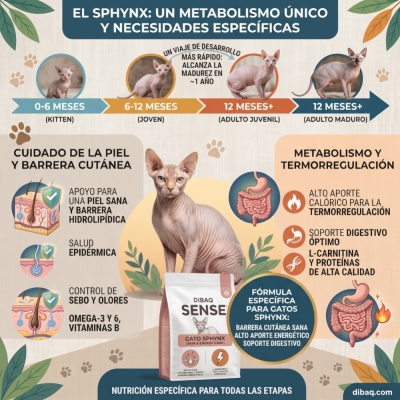
Lacking a coat of fur to insulate it from the cold, the Sphynx expends more energy than a typical cat just to maintain its body temperature, resulting in a faster metabolism and higher-than-average caloric needs for felines. Furthermore, because it has no fur to absorb excess oil from its skin, its sebum accumulates directly on the skin's surface. Therefore, the quality of the fats it consumes (primarily omega-3 and omega-6 fatty acids) directly impacts the appearance and health of its skin, which is much more exposed than that of any other breed.
It's content with a lot of visual appeal and search potential, perfect for talking about formulas with higher energy density, a high supply of essential fatty acids for the skin, and your grain-free philosophy as an ally against the skin sensitivities that this breed often presents.
A race born from a mutation
The Sphynx is not the result of a passing fad, but rather a natural genetic mutation detected in Canada in the 1960s and subsequently selected by breeders. Despite its appearance, it is not entirely hairless: its skin is usually covered with very fine down, almost imperceptible to the touch, but it is there, and this explains why petting it feels warm and soft, quite different from that of a cat with normal fur.
Why does your cat need baths that other cats don't?
Because they lack fur to absorb the skin's natural oils, sebum accumulates directly on the surface and in skin folds, requiring regular bathing to prevent irritation, blackheads, and unpleasant odors. This sebum production is directly related to the quality of the fats in their diet: a food with a well-balanced omega-3 and omega-6 profile helps regulate the activity of the sebaceous glands from within, reducing the need for such frequent baths.
How much more does it have to eat than a cat with fur?
It is estimated that a Sphynx cat may need between 20 and 40% more calories per day than a similar-weight cat with fur, precisely because of the extra energy expenditure for thermoregulation. This means that standard formulas, designed for the average cat's needs, fall short for this breed, and it is advisable to opt for food with higher energy density or adjust the ration with the help of a veterinarian to ensure it doesn't fall below its actual requirements.
Share this content